 Fagradalsfjall Volcano Trips
The Best Time to Visit Fagradalsfjall
The best time to visit Fagradalsfjall depends mostly on daylight, temperature and how much walking you want to do in the wind. This guide walks through the year month by month using ten years of local climate data from the Reykjanes peninsula and the published daylight tables for Reykjavík, which sits about 40 km (25 mi) from the mountain. You will see what summer light does for the hike, what winter darkness costs, when the northern lights evenings run, and why no month gives you a better chance of an eruption than another. If you would rather hand the logistics to someone, you can also compare Fagradalsfjall volcano tours before you pick a season.
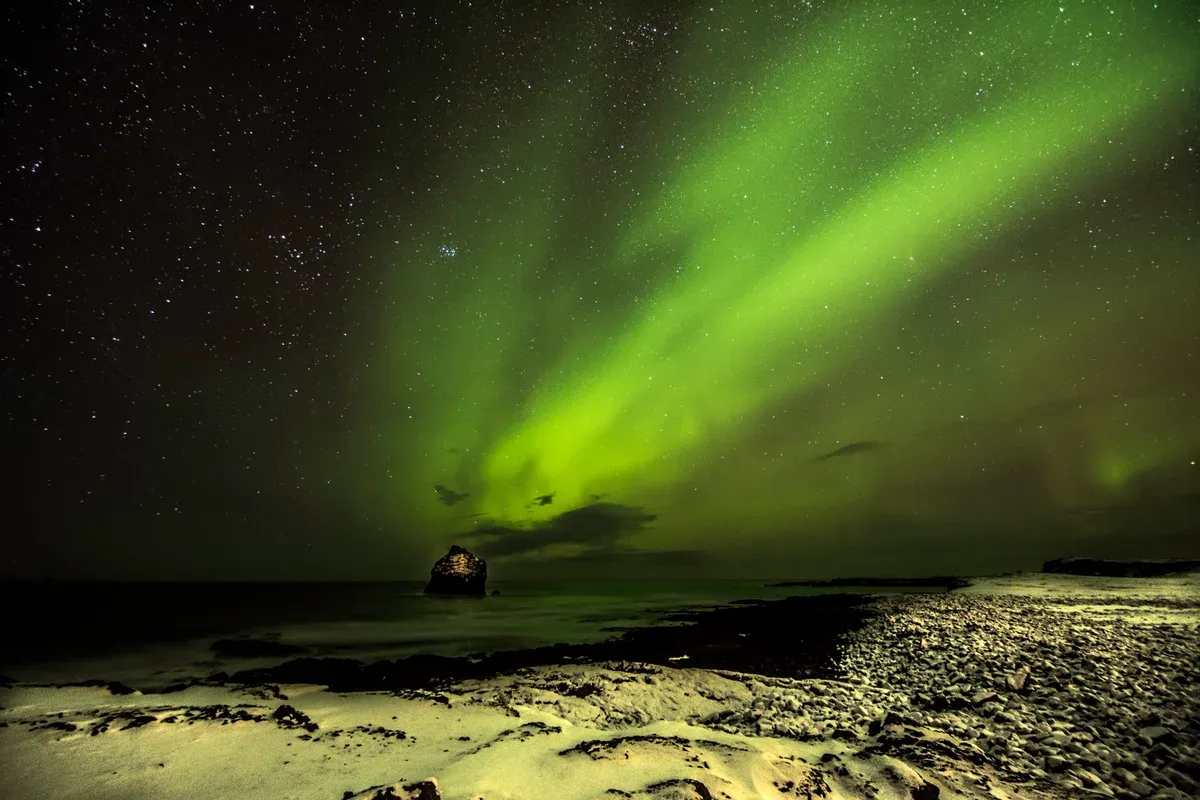
Winter tours here trade daylight for a shot at the aurora over the same lava fields you walk in summer. Photo: Sean O Riordan, CC0, via Wikimedia Commons
Quick answer When to go, in short
The best time to visit Fagradalsfjall is late May to early September, when the daily mean temperature on the peninsula sits around 7 to 11°C and you get 13 hours or more of usable daylight for the 6-8 km hike to the 2021, 2022 and 2023 eruption sites. June to August are the warmest months for walking and also the busiest. September to mid-April adds a real chance of northern lights on a clear night, at the cost of shrinking daylight and ice on the trails. No season raises or lowers the odds of a new eruption.
Key takeaways
- Want the full 2-2.5 hour hike to the crater viewpoints with light to spare? Go in summer with a small-group volcano hike.
- Short on daylight or fitness? A minibus loop with the Nátthagi viewpoint keeps the walking to about an hour.
- Chasing both lava fields and the aurora? Look at the hike and northern lights night tour in the darker months.
- Going without a guide? The driving, parking and trail details are on the visiting without a tour page.
Seasons at a Glance
The two climate sources below describe the same place with two different metrics, so read the labels. The area mean is the ten-year daily average right by Fagradalsfjall, and the Keflavík high is the official airport average daily maximum, about 20-30 km away.
Month by Month
The table compares the Fagradalsfjall area mean temperature (2016-2025, ERA5 reanalysis) with the Keflavík Airport official 1991-2020 average daily high, and adds the practical takeaway for a hiker. The two numbers differ because one is a 24-hour mean in rough terrain and the other is an afternoon peak at a coastal airport. Use the mean to judge how cold you will feel on the ridge and the high to judge the best part of the day.
Two honest notes on what the table cannot tell you. First, Iceland's wind matters as much as its temperature, and no single published monthly wind figure exists for the trail itself, so treat calm days as a bonus in any month. Second, an 11.1°C mean in July is still cool hiking weather, and Keflavík records about 1,377 mm of precipitation a year, which is why the packing page matters more than the month. For boots, layers and spikes by season, see what to bring.
| Month | Area mean temp | Keflavík avg high | What it means for the hike |
|---|---|---|---|
| January | 0.6°C | 3.4°C | Coldest month, shortest days, ice likely, aurora season |
| February | 1.3°C | 3.4°C | Short days, near-freezing, aurora season |
| March | 1.8°C | 4.2°C | Days lengthening, still near-freezing, aurora season |
| April | 4.4°C | 6.7°C | Milder, aurora season runs to about mid-April |
| May | 6.8°C | 9.5°C | Long evenings, outside aurora season |
| June | 9.0°C | 12.6°C | Long days, prime hiking |
| July | 11.1°C | 14.2°C | Warmest month |
| August | 10.9°C | 13.6°C | Warm, aurora season starts late in the month |
| September | 8.4°C | 11.1°C | About 13 hours of average daylight, aurora season |
| October | 5.5°C | 7.6°C | Cooling fast, days shortening, aurora season |
| November | 3.0°C | 5.0°C | Short days, ice possible, aurora season |
| December | 1.2°C | 3.7°C | Shortest days of the year, aurora season |
Sources: Open-Meteo ERA5 reanalysis and Weatherspark/NOAA normals for Keflavík
Summer: The Honest Best Window
June to August gives you the easiest conditions the trail ever offers, and that is why it is also the busiest.
What You Get
The area mean sits at 9.0°C in June, 11.1°C in July and 10.9°C in August, with Keflavík afternoon highs of 12.6 to 14.2°C. Path A runs 6-8 km each way, about 2-2.5 hours of hiking, and the long June and July evenings remove the single biggest risk of the route, running out of day. The trail network is open whenever no eruption is active: path A past all three eruption sites, the 4.7 km dark blue route toward the Sundhnúksgígar side, the 4 km green Langihryggur ridge and the short 2 km yellow Nátthagi paths.
What You Pay For It
Summer is the busy season, so the cost of the best weather is company. The parking fee at the volcano is 1,000 ISK (about $8) per vehicle, paid through the Parka app, and a paid ticket lasts 24 hours. There are no staffed kiosks at the trailheads, so pay in the app.
A guided option removes the parking step, and a small group keeps the company down, for example the hike with a geologist, which caps at 6 people.
Best Time to Visit Fagradalsfjall on Video
What path A looks like under snow and ice. Third-party video by Iceland Explorer. We did not shoot it and have no relationship with the creator.
Winter: Darkness, Ice and Why People Still Go
From December to February the daily mean on the peninsula runs 0.6 to 1.3°C and the light shrinks to a short midday window.
The Daylight Problem
Reykjavík, 40 km away, gets only a few hours of daylight around the winter solstice, and the trail has no lighting of any kind. Path A at 2-2.5 hours each way needs a late-morning start, and even then you carry a headlamp as insurance. The Keflavík average high in January and February is only 3.4°C, and wind-driven rain at near-freezing temperatures is a common combination on an exposed ridge.
Ice on the trail is the real seasonal hazard, and microspikes stop being optional equipment in the coldest months.
What Winter Buys You
Winter is northern lights season, which general Icelandic travel-guide consensus places from late August or September through mid-April, needing dark and clear skies away from town light. No single official page publishes aurora dates specific to Fagradalsfjall, so treat the window as approximate. One way to combine both is a daylight hike followed by an evening aurora drive, which is exactly the structure of the hike and northern lights night tour, an 11-hour day from Reykjavík that includes about 5 hours at the Meradalir eruption site and a second pickup at 21:30 for the lights.
Its northern lights leg has the usual honest caveat: clear skies are a probability, never a promise. Note also that the Sundhnúksgígar eruption area nearer Grindavík is closed, with no hiking trails or parking defined there, so the winter aurora question is about the open Fagradalsfjall trail network only.
The Shoulder Months: March to May and September to November
Spring and autumn are the compromise seasons. By March the mean is 1.8°C and daylight is climbing fast, though mornings stay icy. September is the pick of the two: the average day holds about 13 hours 3 minutes of daylight, sunrise moves from 06:10 to 07:34 across the month and sunset from 20:47 to 19:03, and the aurora season has restarted.
The mean temperature of 8.4°C suits the full path A hike. October drops to a 5.5°C mean and the daylight falls away quickly, so plan a morning start. Path E to Meradalir, 18-20 km both ways and 5-6 hours of hiking, is best kept for the long days of late spring and summer.
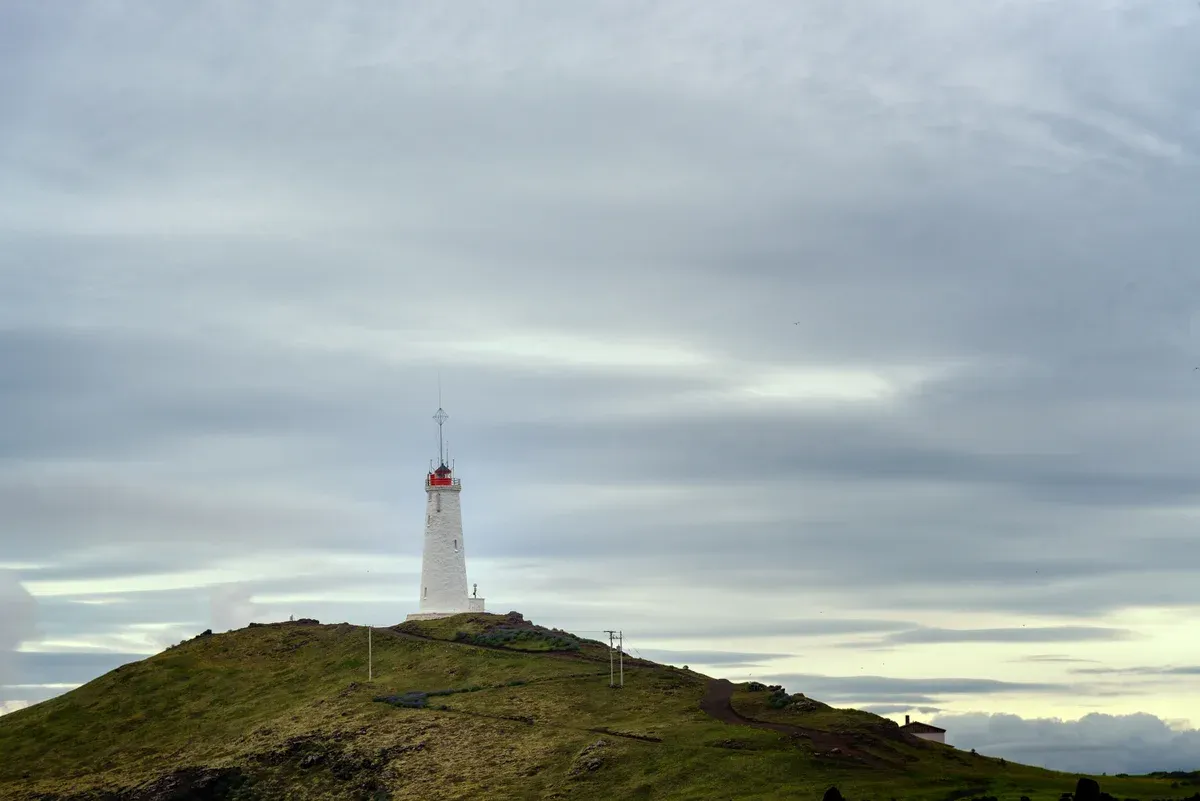
Reykjanesviti was first built in 1878 and moved to its current clifftop site after the original tower cracked in an earthquake. Photo: Joe deSousa, CC0, via Wikimedia Commons
Time of Day Matters More Than You Think
Whatever the month, the hour you start decides how much wind you meet and how much light you keep.
Morning, Afternoon or Evening
Afternoon is when the Keflavík average highs occur, 14.2°C in the warmest month, so the most comfortable temperatures sit in the middle of the day. Morning gives you the most daylight in hand. Evening is the underrated slot in summer, since June and July light runs late.
In the darker months none of this flexibility exists: the practical window is late morning to mid-afternoon, and a listing such as the afternoon hike to the eruption sites is built around that rhythm, running 7 hours from Reykjavík with about 3 hours on the ground at Geldingadalir.
Does Any Season Make an Eruption More Likely?
No. This is the question the month-by-month framing always tempts people into, and the honest answer is that the calendar has nothing to do with it.
What the Monitoring Actually Says
The Icelandic Met Office, the authoritative source on this, reports no active eruption, with the most recent event on the Sundhnúkur crater row having ended after roughly 20 days in the summer of 2025. Since then about 29.1 million cubic metres of magma, with an uncertainty range of 28.3 to 29.9 million cubic metres, has accumulated beneath Svartsengi, and the land there has risen by roughly five centimetres over the most recent three months. The Met Office's own wording is that as long as uplift continues, a magma intrusion into the Sundhnúkur crater row remains the most likely next step and could lead to an eruption, but that it is not possible to predict when, and a short lead time must be expected.
Nothing in that picture points to a season. An eruption can also close trails, roads and Grindavík at short notice rather than open a viewing opportunity, so any plan should have a plan B. The 12 eruptions on the peninsula since 2021 started in nine different months of the year, from January to December, so the calendar shows no pattern.
What That Means for Your Booking
Book the season for light and weather, not for lava. Every tour on this site walks cooled lava from the 2021, 2022 and 2023 Fagradalsfjall eruptions, and several operator descriptions still carry old text implying flowing lava, which does not match the current situation. Because weather, gas and a new eruption can all close the area, read the cancellation terms before you pay.
How operators handle a shutdown day is covered on the weather cancellations page, and the gas rules, the lava rule and the emergency numbers sit on the safety page. Check the live gas forecast at loftgaedi.is and the road status at road.is before any winter drive, since conditions change with volcanic activity.
Which Season Fits You
Four common travellers, four different answers.
If You want the full crater hike in the easiest possible conditions
Go June to August, start in the morning, and expect company. A small-group option such as the original local hike, about 8 km round trip with roughly 300 m of elevation gain, fits this plan.
If You want northern lights and a volcano in one day
Book the darker months, September to mid-April, and pick a combo such as the hike and northern lights night tour, knowing the aurora depends on clear skies.
If You have limited fitness or small children
Choose a mild month and the short option. The Nátthagi paths run about 2 km one way, or take a driving circuit such as the Reykjanes minibus tour with its roughly 1-hour viewpoint walk.
If You are self-driving and flexible
Any season works if you chase the weather forecast rather than the calendar. The 1,000 ISK (about $8) parking ticket is valid for 24 hours, so one payment covers a morning and an evening visit on the same day. The full logistics are on visiting without a tour.
Frequently Asked Questions
What is the best month to visit Fagradalsfjall?
July has the warmest conditions, with an area mean of 11.1°C and a Keflavík average high of 14.2°C, while September pairs 8.4°C with about 13 hours of daylight and returning darkness for the aurora. Pick July for pure hiking comfort and September for the balance of light and lights, then check the Fagradalsfjall tour price comparison for options in your window.
How many hours of daylight does Fagradalsfjall get in summer?
Reykjavík, 40 km from the mountain, runs nearly round-the-clock light around the summer solstice, and even September still averages about 13 hours 3 minutes a day. That is more than the standard Path A hike needs, so summer light is never the limiting factor. The 9-hour volcano circle tour shows how much a summer day can hold, pairing a roughly 3-hour Geldingadalir hike with the wider geopark.
How cold does it get at Fagradalsfjall in winter?
The ten-year area mean is 0.6°C in the coldest month and 1.2°C in December, with Keflavík average highs of 3.4°C, and wind makes it feel sharper on the exposed ridge. Dress for near-freezing wet conditions rather than the numbers alone. Seasonal kit guidance is on what to bring.
Is there any month when I might see flowing lava?
No month is better than another, because nothing is erupting and no one can predict the next event. The Met Office reports that the most recent eruption ended after about 20 days in the summer of 2025, with magma still accumulating under Svartsengi and a short lead time expected before anything new. The current state of the site is explained on what you will see.
Which is better for the hike, morning or evening?
Morning gives you the most daylight in hand, and one 1,000 ISK (about $8) parking ticket covers 24 hours. Evening works well in June and July, when the light lasts late. Winter removes the choice, since the practical window is late morning to mid-afternoon, which is why the afternoon eruption-site hike is timed the way it is.
When do I need crampons or spikes on the trail?
Expect ice from late autumn through early spring, when the area mean sits between 0.6°C and 4.4°C. The small-group local hike supplies crampons in winter and the geologist hike supplies them when needed. The full kit list is on what to bring.
When is the worst time to visit Fagradalsfjall?
The hardest window is the darkest part of winter, when Reykjavík gets only a few hours of daylight, the mean is about 1°C, and icy trail sections make the longer routes unwise for most walkers. Add storm days in any month, since wind and rain can close the hike entirely. If the weather turns on your booked day, what happens next is set out on weather cancellations.